


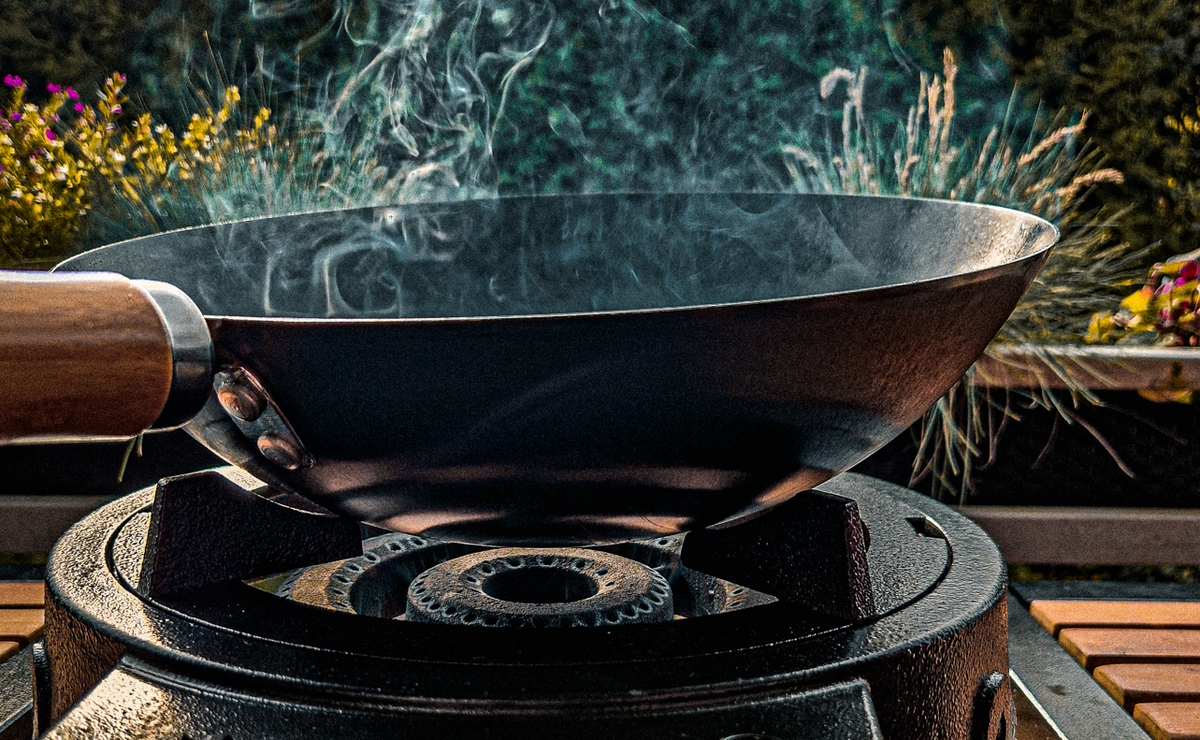
Seasoning a carbon steel wok means baking a very thin film of oil onto the steel. This protective layer helps prevent rust and makes the cooking surface easier to use. It develops further each time you cook.
This short HOT WOK guide takes you through the first seasoning in six steps. Watch the video, then follow the checklist below.
Jump to the six steps | Help with sticky surfaces, uneven colour and rust
Watch: How to Season Your Carbon Steel Wok
What You Need
- An uncoated carbon steel wok
- A suitable HOT WOK burner and a stable cooking setup
- Warm water, a soft sponge and a little dish soap for the initial wash
- A neutral, refined cooking oil with a high smoke point, such as sunflower or rapeseed oil
- Kitchen paper and long cooking tongs
- Dry, heat-resistant gloves
Follow the care instructions supplied with your wok. This method is for uncoated carbon steel; factory-coated non-stick cookware needs different care.
Before lighting the burner: use your HOT WOK in the location specified in its manual. Outdoor-only burners must be used outdoors. Keep the setup stable and the wooden handle, kitchen paper and oil bottle away from the flame.
Season Your Wok in Six Steps
1. Wash Away the Factory Protection
Wash the new wok thoroughly with warm water, a little dish soap and a soft sponge to remove the protective factory oil and residue. Rinse well. Check the supplied instructions if your wok has a protective coating that needs a specific removal method.
2. Dry and Heat Gradually
Dry the wok with a towel, then warm it over a low to medium flame until all moisture has evaporated. Increase the heat gradually as needed. A powerful HOT WOK heats carbon steel quickly, so full burner output is not necessary.
3. Heat the Cooking Surface Evenly
Using dry, heat-resistant gloves and a secure grip, carefully rotate and tilt the wok so the base and sides receive heat. Keep the handle away from the flame. The steel may turn gold, brown or blue as it heats; this colour change is normal.
Keep the wok under control and avoid overheating one spot. Colour changes in the bare steel are not the oil seasoning itself: the protective layer is built in the following steps.
4. Switch Off and Apply a Very Thin Film of Oil
Switch off the burner and let the wok cool until it is safe to work around. It can remain warm. Put a small amount of oil on folded kitchen paper and hold it with long cooking tongs to wipe the inside, including the sides. Keep your hands clear of the hot steel.
Use fresh kitchen paper to wipe away excess oil. The surface should look almost dry, with no puddles or thick streaks. A very thin film is the key to a smooth seasoning.
5. Heat the Oil Film
Put the wok back securely on the burner. Start with moderate heat and increase only as needed until the thin oil film begins to smoke lightly. Carefully rotate the wok to heat the surface evenly. Do not pour more oil into a smoking-hot wok.
Heating transforms the thin oil film into the seasoning layer. Switch off the burner and let the wok cool before touching or wiping it again.
6. Repeat, Cool and Start Cooking
Repeat the thin-oil-and-heat process another 2–3 times, allowing the wok to cool enough to apply each new film safely. Let it cool after the final round. The initial surface should be dry rather than greasy or sticky.
Do not worry about a perfectly uniform black finish. Your wok will darken and develop its own patina with regular cooking.
Common Seasoning Questions
Why Is My Wok Sticky?
A sticky surface often means too much oil was applied or the oil film was not heated sufficiently. Let the wok cool, wash away sticky residue and dry it completely. Reapply a much thinner film and repeat the heating step. Avoid covering a thick, sticky layer with more oil.
Is Uneven Colour Normal?
Yes. Gold, brown, blue and darker patches can appear during heating and early use. An even black colour is not a requirement for starting to cook. Focus on thin layers and a clean, dry surface.
What Should I Do About Rust?
For light surface rust, let the wok cool and clean the affected area with a suitable non-metallic scouring pad, following the wok's care instructions. Rinse, dry completely and re-season the exposed steel. Keep the wok dry between uses.
Why Does Food Still Stick?
A new seasoning improves over time, but it does not replace good cooking technique. Preheat the wok, add cooking oil before the food and cook in manageable batches. Let ingredients sear briefly before moving them, rather than scraping immediately.
Which Oil Should I Use?
Choose a neutral, refined oil with a high smoke point, such as sunflower or rapeseed oil. Use only a thin film for seasoning; this is different from the amount of oil you use when stir-frying.
Clean, Dry and Store After Each Cook
Let the wok cool enough to handle, then clean with warm water and a soft sponge or brush, following the supplied care instructions. Avoid soaking it or putting it in the dishwasher. Dry it thoroughly, using gentle heat to remove remaining moisture, and wipe on a very light film of oil before storing it in a dry place.
For model-specific care and setup instructions, see the HOT WOK user manuals and care guides. For more detail on seasoning, read our complete carbon steel wok seasoning guide.
Your First Cook in Your Seasoned Wok
Your wok is ready to start building its patina through cooking. Try our flank steak and Sivri pepper wok recipe, or explore more HOT WOK recipes. Have your ingredients ready before you turn on the burner, and give the food enough space in the wok.
Putting together your setup? Explore our HOT WOK 30 cm carbon steel wok and HOT WOK burners.


